Essays of Michel de Montaigne, Book 1
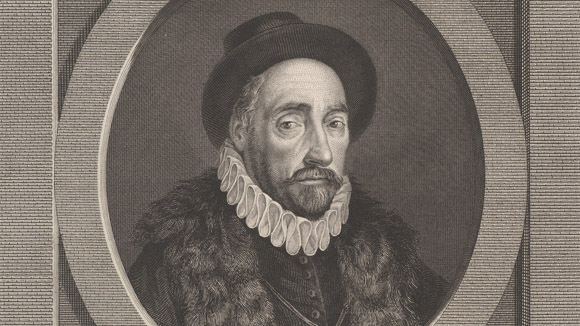
Portrait of Michel de Montaigne, Augustin de Saint-Aubin, 1774
Thus, reader, myself am the matter of my book: there’s no reason thou shouldst employ thy leisure about so frivolous and vain a subject.
In 1570, Michel de Montaigne, then 37, retired from his law career. A year later, he began his real work. Sequestering himself in his study (literally a tower), he set about inventing, and even immediately perfecting, a new literary form: the essay.
The collected results of the decades of work that followed elevated Montaigne from a minor historical footnote to the pantheons of philosophy, literature, and even psychology. He essays over the broadest range of topics but always returns to his favorite subject: himself. And with what disarming honesty does he treat that subject! Try this out:
I have never seen greater monster or miracle in the world than myself: one grows familiar with all strange things by time and custom, but the more I frequent and the better I know myself, the more does my own deformity astonish me, the less I understand myself.
Or this:
There is not a man living whom it would so little become to speak from memory as myself, for I have scarcely any at all, and do not think that the world has another so marvellously treacherous as mine. My other faculties are all sufficiently ordinary and mean; but in this I think myself very rare and singular, and deserving to be thought famous.
Refreshingly humble! Montaigne should at least make for our one of our more likeable authors. We will read all of Montaigne's 107 essays, but fortunately he published them in three books (although modern editions usually bind them as one volume). So we will tackle them one at a time, with breaks in between to keep O.S.S.I fresh and varied. This month, you need only read the first book.
There are four prominent choices among English translators of The Essays:
- John Florio (1603)
- Charles Cotton (1685, but updated by William Hazlitt in 1877)
- Donald Frame (1957)
- Michael Screech (1991)
It is not easy to choose, but Ian Chadwick has made a detailed comparison of these four on his blog, which may influence you one way or another. I will be reading Frame's translation.
We will meet on Monday, June 29, at the usual time, in Vinos Los Olas, where we may enjoy "the influence of Dionysos, that good deity who restores to younger men their gaiety and to old men their youth", both of which we could all do with more of. See you then.
 2026
2026 Subscribe with RSS
 Flickr
 Twitter
 Google +
 LinkedIn